Condition assessment
We inspect defect type, panel history and paint condition under focused lighting before recommending a correction level.
Specialist paint restoration
A controlled machine-polishing process that permanently removes or reduces defects in the clear coat—rather than temporarily filling them—to restore clarity, reflection and depth.
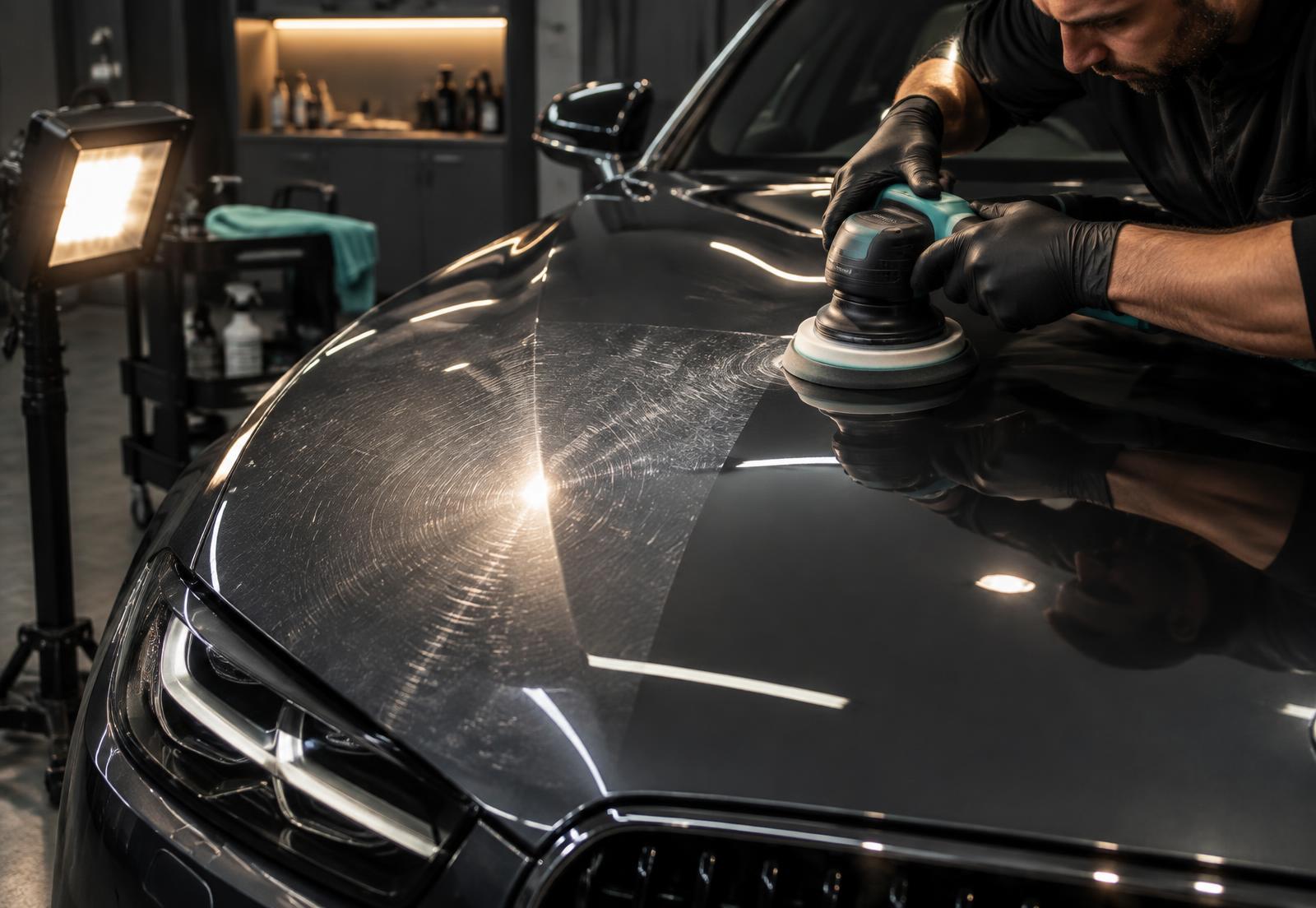
Fine scratches and swirl marks scatter light, making paint look dull or hazy. Paint correction uses selected pads, compounds and polishes to remove a microscopic amount of damaged clear coat and level the surface around suitable defects. The goal is the best safe improvement, not aggressive polishing for an unrealistic claim of perfection.
Key benefits
Our process
We inspect defect type, panel history and paint condition under focused lighting before recommending a correction level.
A careful wash removes loose grime before bonded iron, tar and surface contamination are removed.
We test a small area to identify the least aggressive pad and polish combination that gives a worthwhile improvement.
Panels are polished methodically with controlled passes while edges, trim and sensitive areas are protected.
A finer polishing stage may be used to improve clarity and remove haze left by a stronger cutting stage.
The corrected finish must be protected. We recommend a suitable sealant or separately quoted ceramic coating after inspection.
Best suited to
Many clear-coat defects can be improved, but scratches that catch a fingernail, stone chips, peeling clear coat, cracks and damage through the colour layer may need touch-up or body-shop repair. Because correction removes a small amount of clear coat, we always prioritise paint safety over chasing every last mark.
The corrected paint should be protected and washed safely. Use a clean wash mitt, separate wheel tools, good lubrication and soft microfibre drying towels. Avoid automatic brush washes, which can quickly reintroduce the swirls that correction removed.
Assessment-based service
This specialist service is quoted separately from our wash and detailing packages. We assess the paint condition, vehicle size and your desired result before recommending the work and confirming a price.
Get a free assessment